

Note: I accepted this assignment on condition of anonymity to preserve the man behind the name Dowdy Pickles. Hence the byline of an anonymous reporter.
Note: I accepted this assignment on condition of anonymity to preserve the man behind the name Dowdy Pickles. Hence the byline of an anonymous reporter.
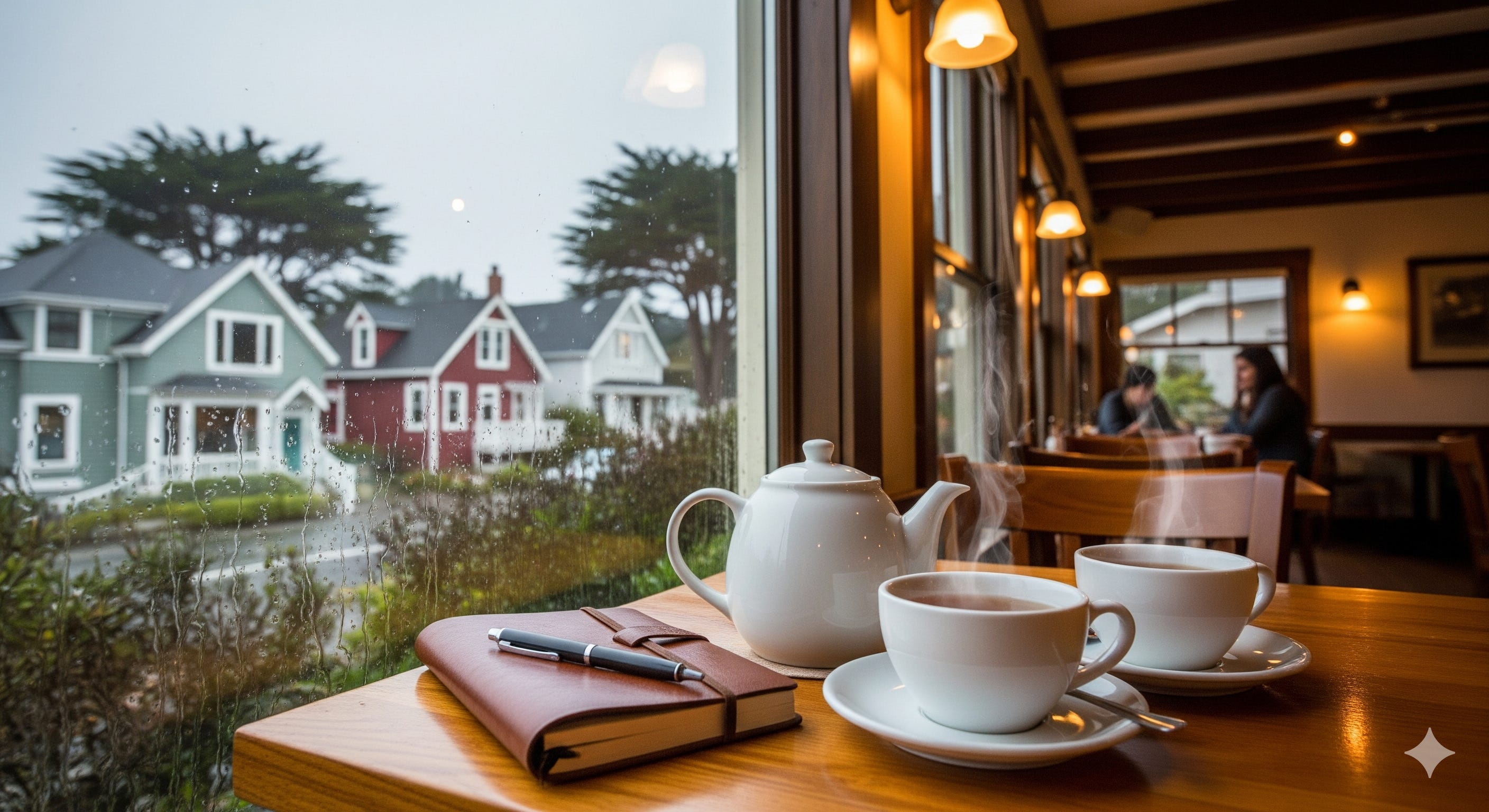
Some writers can only create in solitude, locked away in a study. Others thrive amid clinking cups and murmured conversations. Dowdy Pickles, it turns out, belongs to both camps. When he’s not scribbling furiously in the library at the bottom of his garden, you might find him in a corner café, notebook open, gesticulating with one hand and guarding a steaming cup of tea with the other.
Today, we met at such a café, which will remain nameless. The hiss of the espresso machine competed with the scratch of his pen, but he did not seem to notice. I arrived. We sat, and conversation did not cease until an hour later.
True to form, Dowdy spent as much time discussing teas and coffees as literature, pausing only to lament the disappearance of one particular brew that once defined his afternoons.
Q&A with Dowdy Pickles
Q: Today you’re writing in a café instead of your garden library. What draws you here?
Dowdy Pickles: Atmosphere. Libraries whisper, cafés hum. I like both sounds. Here, I get to steal fragments of conversations, little lines of dialogue. And of course, the promise of hot drinks on demand is irresistible.
Q: Tea or coffee—what’s in your cup right now?
Pickles: Today it’s a cappuccino, though my soul is still loyal to tea. Coffee sharpens; tea soothes. I find coffee gets me started, but tea keeps me going.
Q: You seem to have a global perspective on beverages. What’s your favorite discovery?
Pickles: Oh, endless! There’s smoky lapsang souchong from China, thick Turkish coffee that practically stands up on its own, delicate Moroccan mint… Each cup is a passport stamp. I like that writing feels the same—every story a new place, even if I never leave the table.
Q: You sighed rather dramatically just now. What’s the lament?
Pickles: Russian Caravan. Once upon a time, Peet’s Coffee & Tea carried it. It was a glorious, smoky black tea—like drinking campfire stories. And now? Gone. Discontinued. My cat and I held a private wake. It remains one of literature’s great tragedies, right up there with Anna Karenina.
Q: So how does a vanished tea affect your writing?
Pickles: Well, some pages simply can’t be written without the right brew. Russian Caravan had a way of untying stubborn sentences. I suppose now I must learn resilience—and settle for Earl Grey. But I’ll grumble about it. Writers live on grumbling, after all.
Q: If you could create your own blend, what would it taste like?
Pickles: Equal parts smoke, citrus, and mystery. A tea that insists you write one more page. I’d call it Plot Thickens.
Q: That sounds like something readers would line up to buy. Do you think the rituals around writing—the tea, the café, the fountain pen—are essential, or merely comforting illusions?
Pickles: Both. Rituals are scaffolding for the imagination. You think you need the right pen, the right cup, the right chair—but really, you’re tricking your mind into obedience. Still, I wouldn’t risk writing without my cup nearby. Even illusions have power if you believe in them hard enough.
Q: And when you close the notebook at the end of the day?
Pickles: I walk. Always. Back to the garden library if I’m home, or to the shore if I’m lucky enough to be near it. The mind keeps writing even then. You can’t quite stop it—it’s like a kettle that hums long after it’s boiled.
Q: And what happens after the walk, when the day is finished?
Pickles: I turn off the lamp and let the pages breathe. A story needs darkness now and then, to find its own shape. By morning, the sentences look different—either better or worse, but at least honest.
Q: Does the writing ever stop, truly?
Pickles: Not really. It just changes rooms. Even in sleep, I’ll wake with half a sentence lingering—something overheard from a dream, you might say. I keep a small notebook by the bed for those moments. It’s a dreadful habit; the cat hates it when the lamp clicks on at two a.m.
When the interview ended, Dowdy remained at the table, pen still hovering as if the conversation had simply folded itself back into his notebook. Outside, the rain had begun again—thin, deliberate lines across the glass. From the street, I watched him glance toward the window, then back to the page, already elsewhere. Whatever he was writing next would likely begin the way all his stories seem to: quietly, mid-sentence, as if it had been waiting for him all along.